Ford will produce two electric vehicles on Renault Group's Ampere platform at ElectriCity facility in northern France
Ford and Renault are combining forces to defend European territory against Chinese competitors flowing into continental markets with affordable electric vehicles (EVs). Ford will produce two branded models using Renault’s Ampere platform at the latter’s ElectriCity facility in northern France starting early 2028, while both companies explore joint development and manufacturing of light commercial vehicles (LCVs) for their respective brands.
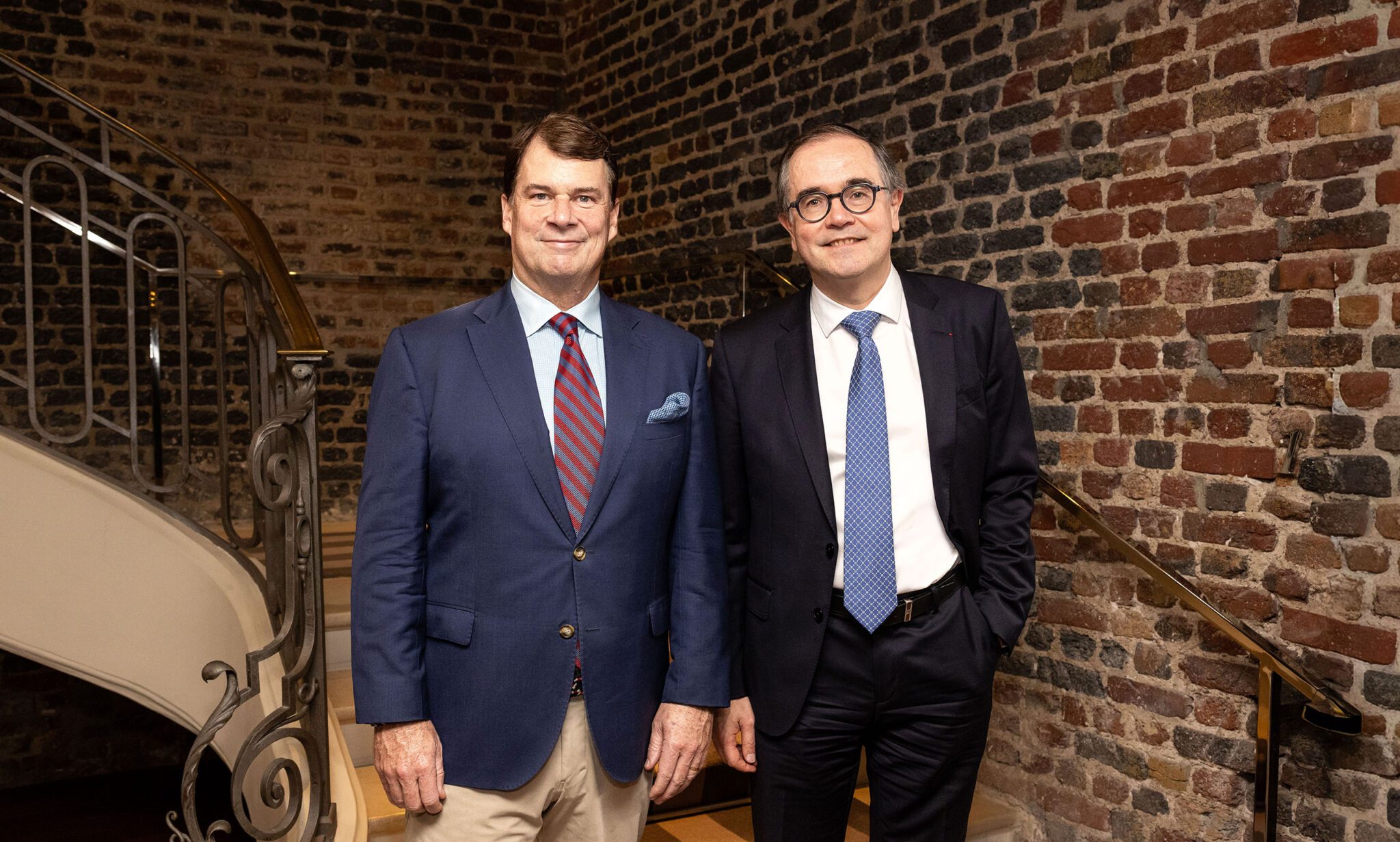
Ford Chief Executive Jim Farley framed the partnership as an existential battle during the Paris announcement. “We’re in the fight for our lives and our industry, and [there is] no better example than here in Europe,” Farley said. “Together, we can create a powerhouse of light commercial vehicles in Europe. We believe this is a big differentiation compared to the Chinese.” Back in June, Farley characterised China’s automotive industry—particularly its advantage on software and battery-electric technology—as “the most humbling thing I’ve ever seen.”
Ford will lead design work while Renault handles the production side, leveraging the French automaker’s ability to develop new EV models in under two years, half its previous timeline. Newly-seated Renault Chief Executive François Provost told reporters during the announcement ceremony that the company’s strategy aims “to be as competitive and then to even be better than our Chinese competitors in Europe.”
The partnership targets smaller vehicles popular in European cities for affordability and efficiency, whereas Chinese automakers have generally focused on larger, more premium form factors. Europe is currently moving to establish a dedicated compact EV classification in Europe to boost domestic production of affordable battery-electric options.
Farley spent over a year reviewing Ford’s European options before landing on Renault, acknowledging the expensive struggles many Western OEMs have faced during the EV transition, chief among them being higher production costs and affordability. The automaker cut thousands of jobs across Germany and UK during 2025, while reducing its lineup to concentrate on LCVs and other more profitable segments. “We learned a lot of things in Europe and we knew that this next wave will be one of the toughest moments, and we have to face it very humbly,” he said.
The collaboration excludes capital alliances or merger discussions, with Farley characterising Ford as “a wildly independent company”. Ford maintains its separate Volkswagen partnership for LCV production in Europe, while Renault continues its arrangements with Geely for internal combustion engines and its longtime alliances with Nissan and Mitsubishi.
Provost emphasised that smaller cars remain unique to European markets—notably omitting Japan—and represent territory that Chinese rivals have yet to target aggressively. “I want to take the necessary decision to prepare for the future, and it makes so much sense to do this together as much as possible,” he added, noting competition from European rival Stellantis alongside Chinese pressure. Ford declined to specify investment amounts though it previously committed US$2bn transforming its Cologne plant in Germany for electric vehicle production.